

The Child Protection in Humanitarian Action Advocacy Resource Hub
This page serves as a practical reference for practitioners, advocates, and decision-makers — bringing together the latest context, key facts, and a clear overview of how humanitarian crises are impacting children and their protection. It also connects you to essential advocacy resources to support informed action.
Use the buttons below to explore key insights, analysis, and key resources to support advocacy for children in humanitarian settings.
The Impact of Humanitarian Crises on Children and their Protection in 2025 and 2026: An Overview
Across 2025 and into 2026, the number of children affected by wars, disasters, and humanitarian crises continued to rise. By the millions—from Sudan to Gaza, from Ukraine to Colombia—children are bearing the severe consequences of violence, displacement, and climate shocks, increasingly compounded by the convergence of all three.
Around one in five children worldwide now lives in or close to situations affected by armed conflict or armed violence. Living in such contexts significantly heightens children's exposure to violence, exploitation, neglect, and abuse, while undermining their safety, development, and well-being.
Despite their resilience, children remain among the most vulnerable in situations of armed conflict, displacement, and disaster. As violations of international humanitarian and human rights law persist—and in many contexts intensify—insufficient accountability and rising impunity are allowing these violations to continue unchecked, increasing children's exposure to harm and undermining their protection.
The humanitarian system is mandated to protect children in situations that threaten their survival or long-term development. However, today the system is not only facing strain, but is contracting. Structural challenges, escalating needs, and a deepening funding crisis are driving the closure, scale-down, and fragmentation of child protection services, often without safe or principled transition arrangements.
What began as an emerging crisis in early 2025 has, by 2026, become a documented and widespread rollback of child protection services.
Hundreds of millions of children are exposed every day to violence, hunger, fear, and deprivation, including denial of access to health care, education, safe housing, and the protective and nurturing environments of their families and communities. These cumulative risks are affecting children across diverse crisis settings.
Every child is entitled to the right to be protected. This includes the right to survive, to develop to their full potential, and to grow into adulthood with agency and dignity. Yet for large numbers of children worldwide, particularly those living in fragile and conflict-affected settings, these rights are not being realised.
Evidence now confirms that millions of children are losing access to critical protection and support services at precisely the moment when risks are intensifying.
Major humanitarian reforms, alongside funding reductions, are reshaping what support is prioritised, delivered, and sustained. These dynamics are narrowing the space for effective child protection, reducing the availability of essential services, including both specialised child protection interventions and broader sectoral responses that contribute to children's protection.
Taken together, these trends point to a global environment that is becoming increasingly unsafe and unpredictable for children affected by crises, underscoring the urgent need to reaffirm child protection as a central priority within humanitarian action.
At a Glance: Children in Humanitarian Crises in 2025- 2026
- Conflict is spreading: 2024 and 2025 have seen the highest number of countries engaged in armed conflict since World War II, with this trend continuing into 2026.
- 1 in 5 children affected by conflict: Over 500 million children live in or close to armed conflict or armed violence.
- Record levels of displacement: Nearly 50 million children are displaced due to conflict, violence, and natural disasters, accounting for 40% of all forcibly displaced people globally.
- Grave violations of children´s rights are surging: 41,370 grave violations perpetrated against children were verified in 2024 – a 25% from 2023.
- Brutality is intensifying: Increasing numbers of children are subjected to multiple, overlapping violations (e.g. abduction, recruitment, sexual violence).
- Humanitarian access is shrinking: Verified incidents of denial of access rose from 5,205 in 2023 to over 7,900 in 2024, with further increases expected in 2025.
- Climate change is intensifying: One billion children are at extremely high risk of climate induced disasters; an estimated 20,000 children are displaced every day due to extreme weather.
- Funding cuts driving collapse: Sudden cuts in humanitarian assistance are forcing the closure and scale-down of child protection services, leaving children without critical support.
- Wider impacts on children´s lives: Cuts could contribute to 4.5 million additional deaths of children under five years of age by 2030 and also leave six million children out of school by next year, while disrupting already underfunded child protection systems.
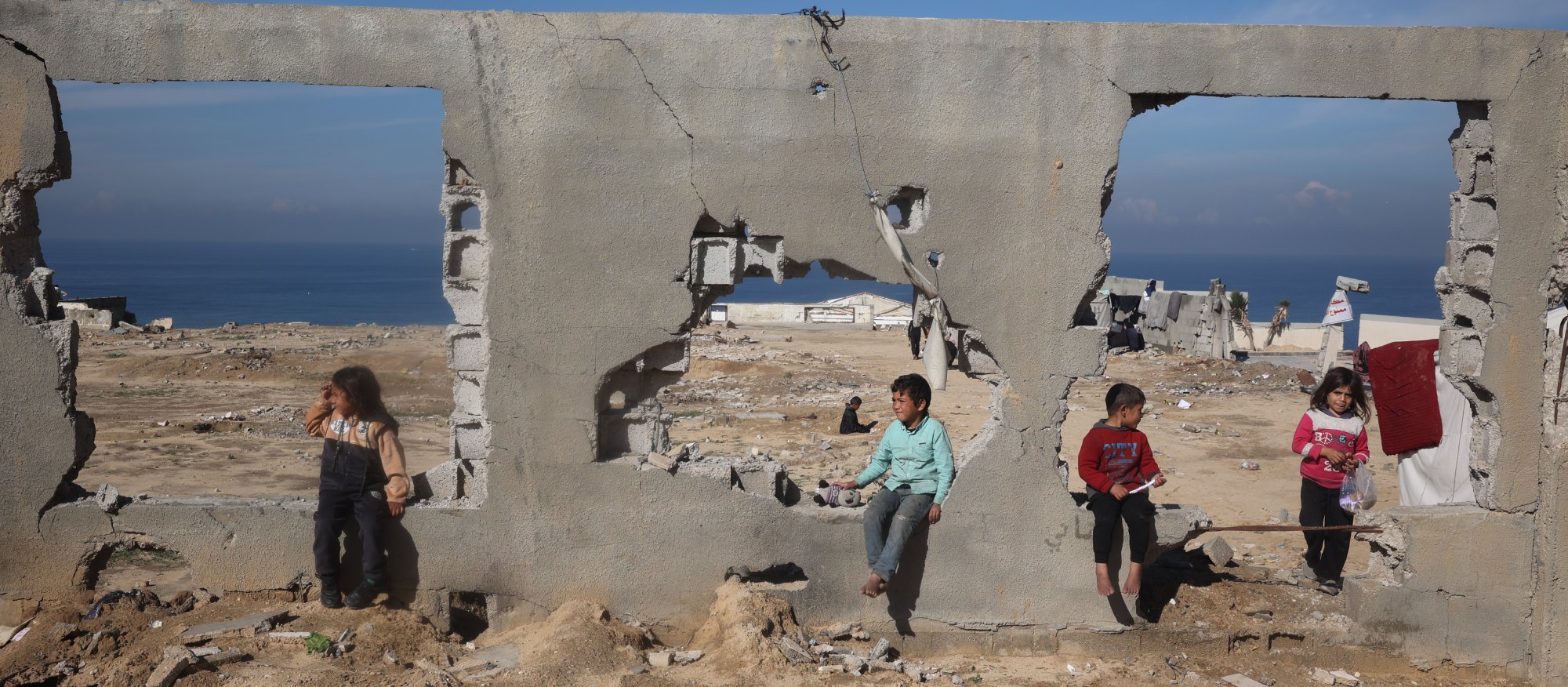
UNICEF/UNI726118/El Baba
The Changing Humanitarian Architecture: System Contraction Increasing Risks for Children
Since 2025, the humanitarian sector has been undergoing major shifts that profoundly impact what support children can realistically access in crises. These changes are no longer incremental but represent a system-wide contraction in both ambition and delivery of critical child protection services, deepening further into 2026.
Since 2025, the humanitarian sector has been undergoing major shifts that are significantly affecting what support children can access in situations of conflict and crisis. These changes—driven by rising needs, funding shortfalls, and system-wide reforms—are reshaping how responses are prioritised and resourced, with direct implications for children’s protection.
From 2025 onwards, the Global Humanitarian Overview (GHO) has been scaled back in the context of constrained funding and an increasing emphasis on prioritisation. The 2025 GHO was reduced to a US$32.6 billion appeal targeting 114.4 million people—just 38.3% of the 298.9 million people in need globally and 64% of those originally targeted. The 2026 GHO continues this trend, targeting 87 million people at a cost of US$23 billion, representing the lowest coverage in a decade, despite rising needs.
At the same time, major humanitarian system reforms—including the humanitarian reset and other restructuring processes—are reshaping how responses are organised and delivered. This is having a direct impact on both specialised child protection prevention and support services, as well as all programming across all sectors that contribute to preventing child protection risks in humanitarian settings.
What New Evidence Shows: Rising Child Protection Violations and Shrinking Services
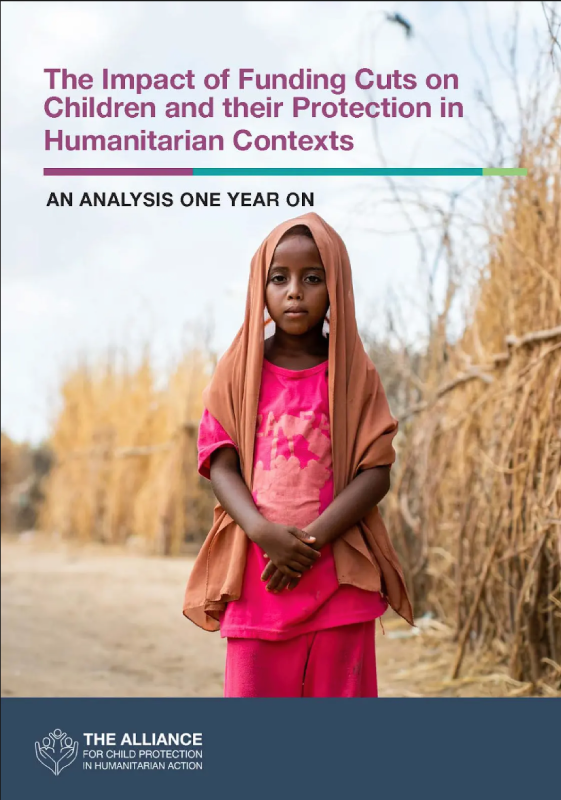
A recent report on the Impact of Funding Cuts on Children and their Protection in Humanitarian Contexts: On Year On, the Alliance for Child Protection in Humanitarian Action confirms that funding shocks in 2025 have evolved into system-wide deterioration in child protection.
- Violations increasing: Nearly 75% of practitioners report rising child protection violations, with 45% reporting a significant increase.
- Conflict contexts hardest hit: 53% report risks increasing significantly in conflict settings (vs 26% elsewhere).
- Services collapsing: 91% report reduced access to child protection services; ~25% report full closures in some locations.
- Fewer children reached: 55% report reduced coverage, with major cuts to frontline presence and activities.
- Core services disrupted: The interventions with the highest reported cuts include MHPSS (64%), cash assistance (63%), programmes for children associated with armed groups (59%), and case management (58%).
- Workforce and quality declining: Over 60% report inability to meet Minimum Standards, with major losses in technical capacity.
- Funding collapse driving impacts: 84% respondents report budget cuts, with half report losing over 40%.
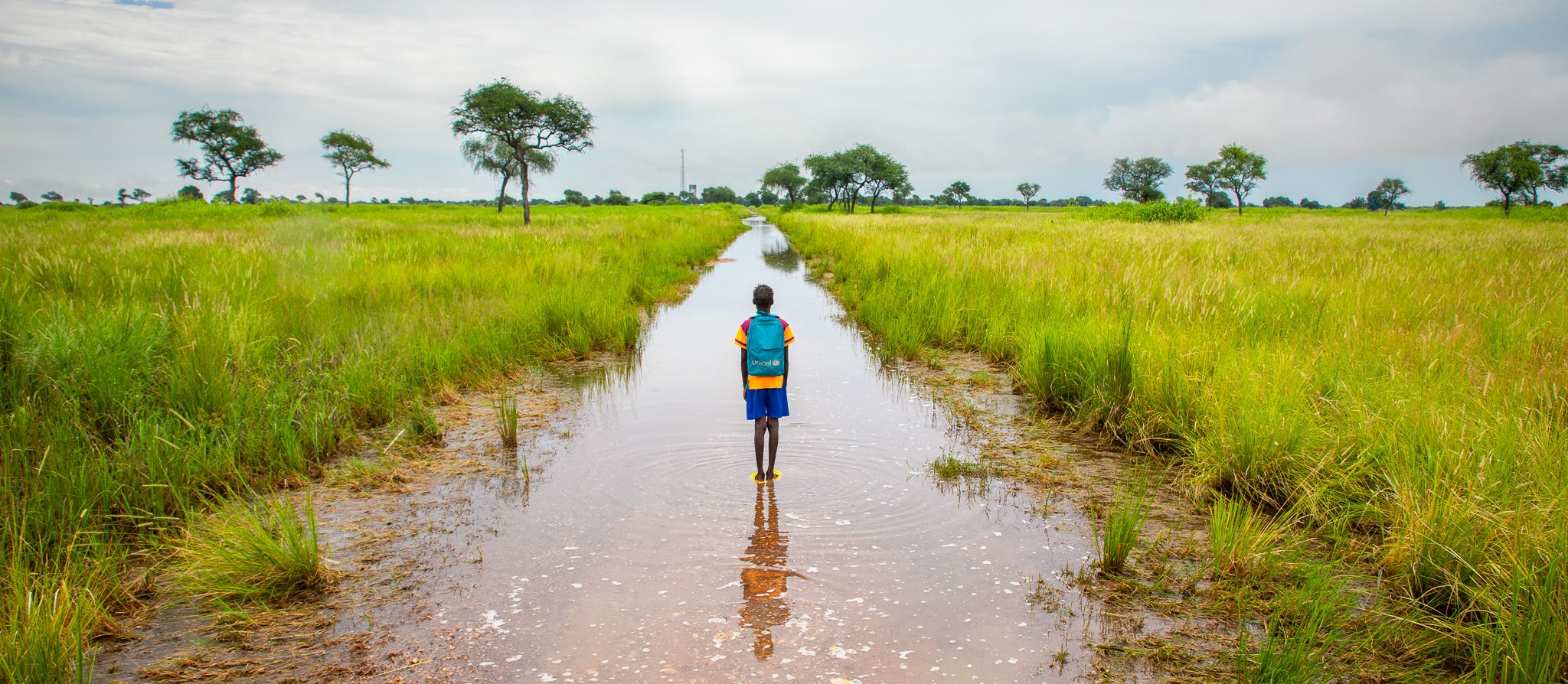
(UNICEF/UNI640023/Pouget)
How Crises Are Affecting Children’s Protection in 2025/2026
Children experience humanitarian crises in ways that are immediate, deep, and long-lasting. The convergence of shocks in 2025 and 2026—including escalating armed conflicts, widespread displacement, climate disasters, and funding shortfalls—is intensifying risks to their protection, development, and well-being.
Click through the carousel to explore the protection risks children face in humanitarian settings, with up-to-date trends and data.
Key Advocacy Resources
For more information on Advocacy Support, Resources, and Tools, please contact the Advocacy Working Group (advocacywg@alliancecpha.org) or our Strategic Partnerships and Advocacy Specialist, Elspeth Chapman (elspeth.chapman@alliancecpha.org).
- 166 views